

The Mystery of the Shinking Images: What is On2 Technologies?
Imagine you have a giant suitcase (a high-quality photo) that you need to fit into a tiny locker (your mobile phone’s slow internet). For decades, the world used JPEGs to do this, but JPEGs were heavy and made websites slow. To solve this, we have to look back at a company called On2 Technologies. They were like the “magic tailors” of the digital world; they specialized in taking huge video files and folding them so neatly that they became tiny without losing their beauty.
How Google Speeds Up The Internet
In 2010, Google realized that if it wanted the internet to be faster, it needed better “folding” technology. This led to the famous Google On2 Technologies acquisition. Google paid around $124.6 million to buy this company, not for their office or their staff, but for their “secret recipes” for compression, specifically a technology called the VP8 codec. This was a turning point in history because Google decided to give this “secret recipe” away for free to the entire world, starting the Google WebM project.
The VP8 Magic: How a Video Becomes a Photo
You might wonder, “If On2 was a video company, why are we talking about images?” This is the core of the VP8 vs WebP connection. Think of a video as a flipbook—it’s just thousands of photos flashing by very fast. Google’s engineers realized that if they took just one single “page” from a VP8 video, it was actually a much better, lighter photo than any JPEG ever made. This was the video codec to image format evolution that gave birth to the WebP format we see today.
WebP Predictive Coding Explained (The “Neighbor” Trick)
To understand why WebP is so small, you have to understand WebP predictive coding. Imagine you are painting a picture of a blue sky. Instead of writing down the color of every single pixel, WebP looks at one blue pixel and tells the computer: “The next 500 pixels to the right are probably the same shade of blue.” It only records the data if the color actually changes. This VP8 intra-frame coding allows the file to be 30% smaller because the computer is “guessing” the image based on its neighbors rather than memorizing every single dot.
Why Did Google Spend So Much Money?
You might ask, why did Google buy On2 for $106 million (the initial bid) and then even more? It wasn’t just about making photos look good. It was a business war. Back then, other companies owned the “rights” to video formats, and they wanted everyone to pay a tax to use them. By buying On2 and releasing the VP8 and later the VP9 codec for free, Google broke the monopoly. They made it so that anyone, anywhere, could build a website or a video app without paying millions in royalties.
The Internal Logic: Connecting the Dots
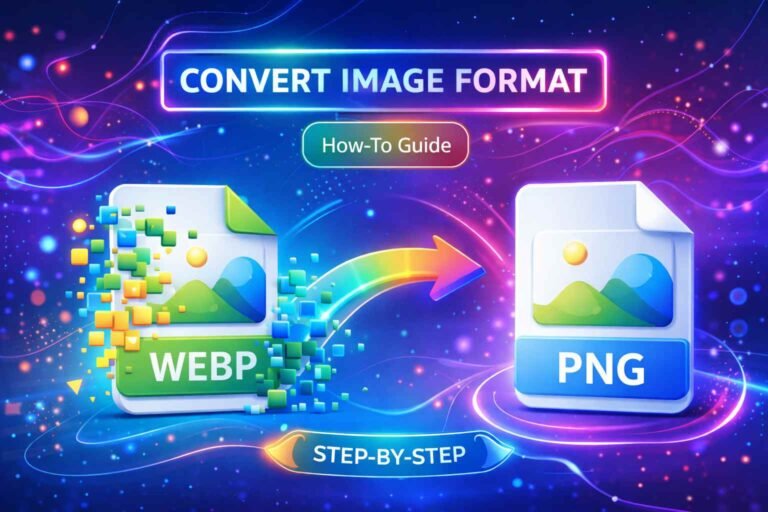
Sometimes, this technology works too well, and you end up with a WebP file that your old photo editor can’t open. This is a common problem for many users who are used to older formats. If you ever find yourself stuck with a file you can’t use, you might need to convert WebP to PNG to get that classic compatibility back while keeping the high quality that the On2 technology originally provided. This is the only downside to using such advanced, “next-gen” technology.
Did You Know You Can Convert Your WebP Images To PNG Images for Free? Learn How To Change 100+ WebP Images To PNG Without Any Cost, Any Limits, Any Restriction!
The Legacy: From VP9 to the Future of 4K
The story of On2 Technologies didn’t end with a simple image format. The foundation they laid allowed Google to create VP9, which is the reason you can watch 4K videos on YouTube today without your computer exploding. VP9 is the “big brother” of the technology used in WebP. It uses even smarter math to compress 8 million pixels into a stream that can travel through a Wi-Fi router. This evolution shows that the history of the WebP format is actually just the first chapter in a much bigger story of how we share data.
Why Is It Still “Controversial”?
Even though this technology is brilliant, it’s called “controversial” because it forced the whole world to change. For ten years, big companies like Apple refused to use it because they had their own plans. This created a “split” in the internet where some images worked on one phone but not another. However, because the technology was so much better than the old ways, eventually everyone had to give in. Today, the legacy of On2 Technologies is inside every smartphone on the planet.
Summary: Why You Should Care
To wrap it up, WebP isn’t just a file extension; it’s a piece of history. It represents the moment Google decided that the “roads” of the internet (the data we send) should be free and fast for everyone. By taking a high-end video tool and turning it into a simple image format, they saved billions of gigabytes of data from being wasted. Whether you are a blogger or just someone browsing the web, you are using On2’s “secret recipes” every single day to see the world more clearly and quickly.
Want to dive deeper into the technical side of WebP images?
- The 2010 Original Announcement of WebP – Learn how Google integrated On2’s VP8 technology to revolutionize web speeds.
- Read on Google For Developers News by Google – Learn What Google Said About On2’s VP8 Technology.