
How to Turn Cold Leads into Paying Clients in 2026
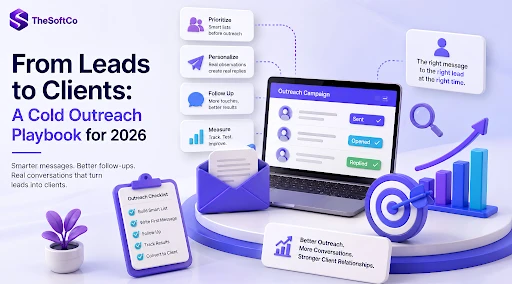
The toughest part of building a list of leads is supposed to be accumulating the list — until you start reaching out and the silence is louder than you thought. A clean spreadsheet with firm names, phone numbers, and websites is useless if none of those contacts develop into a conversation. The companies that will win outbound in 2026 are not the ones sending the most communications. They’re the ones sending fewer messages actually meant to get a reply.
This playbook breaks down the reasons cold outreach gets ignored vs. answered—the same methodology agencies and freelancers featured in our customer stories have used to turn new lead lists into real client relationships.
Why Most Cold Outreach Fails Today
We’ve seen more automated outreach in 2026 than ever before, which means prospects have gotten better at spotting it, too. A letter that starts with a generic compliment, dives directly into a pitch, and then finishes with a nonspecific “let me know if you’re interested” seldom makes it past the first sentence. No matter how excellent the offer is, if the message itself shows it was sent to five hundred other businesses in the same afternoon.
Part of it is timing. A lead that recently opened, or just received a fresh review, or clearly hasn't changed their website in years, is a totally different opportunity than a lead who is already working with an agency and neglecting their email. One of the fastest ways to burn through your good leads and never hear back again is to treat every person on a list the same way.
And perhaps the most common mistake of all is simply giving up too early. Most replies don't come from the first message — they come from the second or third, sent a few days apart, once a prospect has actually had time to notice the first one.
There's also a scale problem hiding underneath all of this. Many people treat outreach as something to squeeze in between other work, sending a handful of messages when time allows rather than running it as a consistent process. Inconsistent outreach produces inconsistent results — a few good weeks followed by a long stretch of silence, simply because the pipeline behind it went cold. Treating outreach as a weekly rhythm rather than an occasional task tends to matter more than any single tactic on this list.
Start By Prioritizing, Not Blasting
Before writing a single message, it's worth sorting your list instead of working through it top to bottom. If your leads came from a tool like TheSoftCo Leads Engine, you already have the details needed to do this — star rating, review count, and whether the business even has a working website. A business with strong reviews but no real online presence is often a better first target than one that's already investing heavily in marketing, simply because the gap you can help with is more obvious.
If you're still getting comfortable with how to pull that kind of list together in the first place, our step-by-step guide to generating leads walks through the process from search to export.
Writing a First Message That Gets Opened
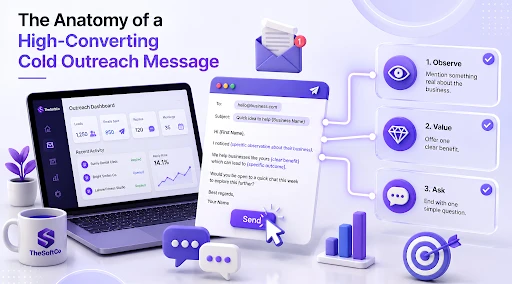
Businesses that respond usually receive communications structured around a simple formula: observe something real, explain one specific benefit, then ask one basic question. That’s the full formula – observation, value, call to action – and it succeeds precisely because it resists the impulse to over-explain.
That observation should be something specific to that firm, not some generic statement you could tell anyone. The value should be one obvious conclusion, not a list of every feature you provide. And the call to action should ask for something tiny – a reply, a quick call, a yes or no – rather than a full commitment at the first contact. Messages that have too many things going on in one shot get skimmed and forgotten more than they get responded.
Length matters more than most people expect. A first message that takes thirty seconds to read gets a very different response rate than one that takes three minutes, even if the second version is objectively more thorough. Prospects aren't evaluating how complete your pitch is on the first message — they're deciding whether it's worth their time to respond at all. Keeping that first message short enough to read at a glance, and saving the detail for the conversation that follows, tends to outperform a longer, more comprehensive opener almost every time.
Following Up Without Becoming Noise
Most of the value in cold outreach shows up after the first message, not during it. A short, low-pressure follow-up three to four days later — one that adds a new angle rather than repeating the same pitch — tends to outperform a single perfect message sent once and never revisited. A second follow-up a week after that, perhaps sharing something genuinely useful rather than asking again, keeps the door open without feeling repetitive.
Where possible, pairing channels helps too. An email followed by a short call, or a LinkedIn message that references the same context, often lands better than relying on one channel alone. You don’t start the relationship from scratch every time, you strengthen the last touchpoint.
The tone of a follow-up matters as much as its timing. A message that simply repeats "just checking in" rarely earns a response, because it adds nothing new for the prospect to react to. A follow-up that shares a genuinely relevant example, mentions something you noticed changed on their end, or asks a slightly different question keeps the conversation feeling alive rather than like a reminder sitting in an inbox.
Avoiding the Pitfalls That Quietly Kill Response Rates
A handful of habits are responsible for most of the outreach that never gets a reply: pitching before establishing any relevance, sending exactly one message and moving on, and reusing the same script across an entire list regardless of who's actually on the receiving end. None of these mistakes are dramatic on their own, but together they're the difference between a campaign that converts and one that quietly fades into everyone's inbox.
Measuring What's Actually Working
Measurable outreach is more effective than gut feelings alone. To gauge the efficacy of your subject lines and timing, look at your open rates. You can tell if the message is effective by looking at the response rate. In most cases, it's not the outreach itself that's at fault, but rather the follow-up steps taken in response to genuine interest. To get a better sense of what to change, check these stats every few weeks rather than after each send.
It also helps to review outreach the same way you'd review any other part of the business — by comparing batches rather than individual messages. Sending fifty messages with one opening line and fifty with a different one, then comparing reply rates between the two groups, tends to reveal far more than judging a single message as good or bad in isolation. Small, consistent tests like this compound over time into a noticeably sharper sense of what actually works for a specific audience.
The Data Behind the Message
None of this works without accurate contact information sitting underneath it. A well-written message sent to a disconnected number or an outdated website does nothing, no matter how personalized it is. This is really where outreach starts — with a list built on current, verified data rather than one that's been sitting in a spreadsheet for months. Our complete guide to Google Maps lead extraction covers how to keep that data fresh at scale, and the Leads Engine pricing page breaks down how far a free plan can take you before it's worth upgrading.
Some Common Questions
How many follow-ups is too many? Usually three or four spaced-out texts are enough to get a feel for whether a lead is worth pursuing further. After that, perseverance begins to seem like pressure.
Personalization is a must-have for cold outreach. But does it mean personalizing for every single lead? Not exactly from scratch, but the first sentence should always be something accurate about that particular firm. It can then be followed in a consistent format.
Is cold outreach still working in 2026? Yes, but the bar has been raised. Today, large-scale, generic outreach is less effective than in the past, whereas smaller, well-targeted efforts built on strong data still convert. You may also check out our FAQs page for common setup questions and more information on getting started.
Putting It All Together
Cold outreach that succeeds in 2026 isn’t about the number of your outreach; it’s about sequencing, timeliness, and starting with the appropriate list in the first place. “Prioritize before you pitch, keep messages short and specific, follow up more than once, and measure what’s actually happening instead of guessing.” If your existing list is a bottleneck rather than a starting point, you can register for a free account and generate your next list in minutes, not hours.
Join the Conversation
Share your perspective, ask thoughtful questions, or leave constructive feedback about this article.